Trends & Inspiration22 min read
26 Wedding Trends for 2026: The Definitive Guide to Destination Wedding Trends
India's $16.25 billion destination wedding market is evolving rapidly in 2026. From 'mini private festivals' (The Wedding Bliss Thailand) to Jacquemus-worthy tropical celebrations in Bali and Vietnam, discover what's defining weddings this year. With 85% of Indian couples now considering destination weddings, we reveal the 26 trends shaping 2026—including why Alaska is replacing Iceland for adventure elopements, why Guatemala is challenging Mexico, and how cultural fusion is creating 'global weddings for global couples.'
January 15, 2026By Elite Wedding Planning Team
India's destination wedding industry has evolved into a $16.25 billion market (2024), projected to reach $55.39 billion by 2033. According to Skyscanner's 2024 survey, 85% of Indian couples are either planning or have already had a destination wedding—with Gen Z leading at 49% compared to 33% of Millennials.
As The Wedding Bliss Thailand notes, 'Destination weddings are evolving into mini private festivals.' This shift from traditional celebrations to curated experiences defines 2026 weddings.
The 2026 Destination Wedding Landscape
Market Statistics That Define 2026
| Metric | 2024 | 2025 | 2026 (Projected) |
|---|---|---|---|
| **Average Destination Wedding Cost** | ₹51.1 lakhs | ₹58 lakhs | ₹63-65 lakhs |
| **% of ₹1 Cr+ Weddings That Are Destination** | 55% | 60% | 65%+ |
| **Beach Wedding Market Share** | 32% | 33.21% | 35%+ |
| **Event Planning Segment Growth** | 16% | 17.5% CAGR | Fastest growing |
| **Hill Station Wedding Growth** | 15% | 16.4% CAGR | Emerging trend |
Emerging Destinations for 2026
What's Hot:
- Alaska is replacing Iceland for adventure elopements—similar dramatic landscapes, even more seclusion
- Guatemala is quickly gaining traction as the next Mexico alternative
- Vietnam and Cambodia emerging as Southeast Asian discoveries
- Lesser-known Rajasthan (Bundi, Chittorgarh, Bikaner) over crowded Udaipur
- Kerala backwaters representing the 16.4% CAGR hill station/nature segment
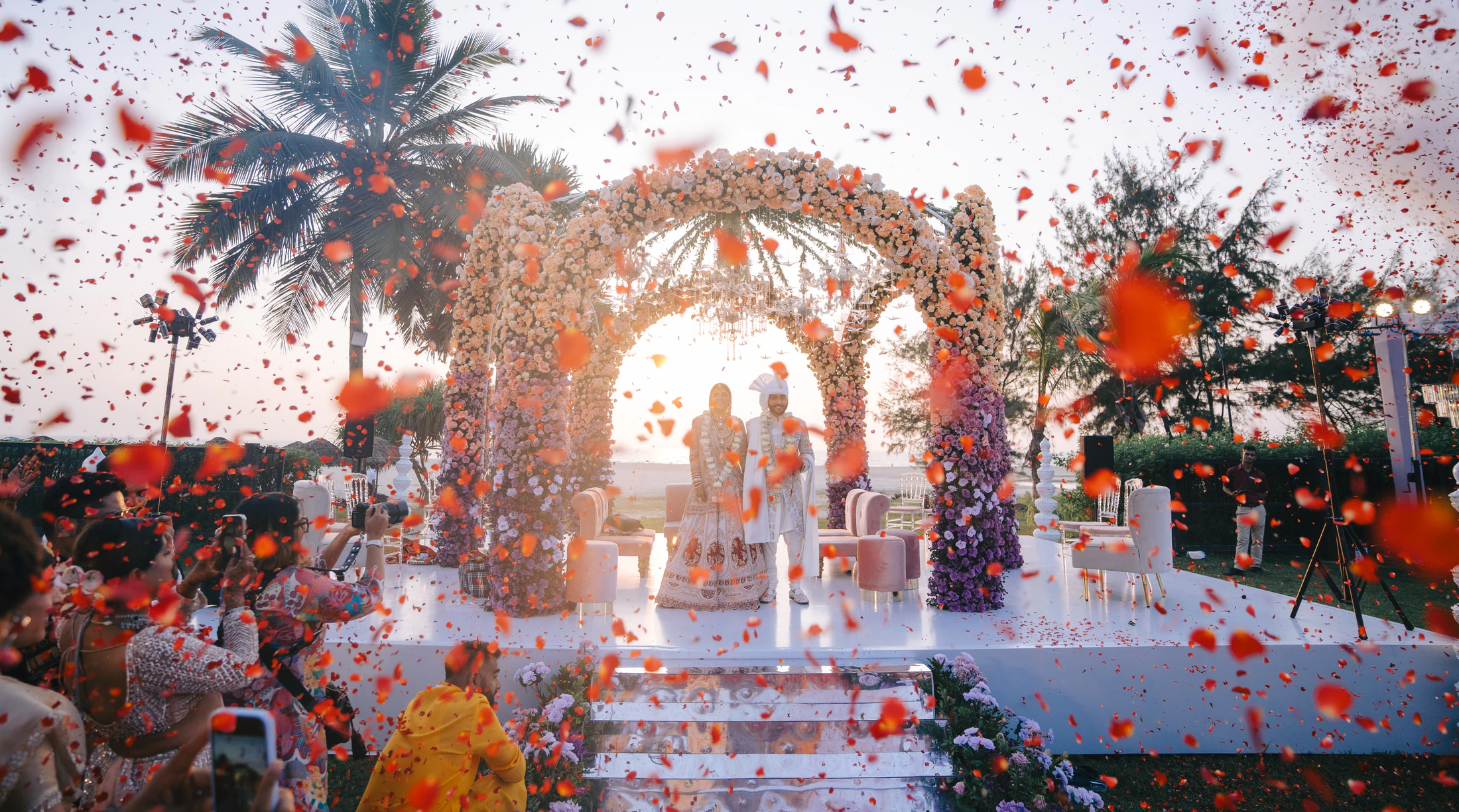
Jacquemus-Worthy Tropical Trend: Bali, Thailand, Vietnam, and Hawaii are defining the lush destination aesthetic of 2026.
Here are the 26 trends we're seeing—and implementing—this year, based on 500+ weddings across India, Dubai, and Thailand.
1. AI-Enhanced Planning & Personalization
What's IN: Smart Technology That Works Behind the Scenes
2026 marks the year AI moved from novelty to necessity in wedding planning. But here's the key: the best AI is invisible to guests.
How AI is transforming weddings:
Planning efficiency:
- AI-powered vendor matching based on style, budget, and availability
- Automated timeline optimization that accounts for travel between venues
- Smart budget tracking with real-time reallocation suggestions
- Predictive guest count modeling based on RSVP patterns
- Automated follow-up sequences for non-responding guests
Personalization at scale:
- Custom menu recommendations based on dietary data
- Personalized gift suggestions for guests
- AI-generated first-draft speeches that couples can refine
- Smart seating arrangements optimizing for relationships and dynamics
- Personalized thank-you notes with specific memories mentioned
Design assistance:
- 3D venue visualization before decoration commitments
- Color palette suggestions based on venue and season
- Floral arrangement previews using actual vendor inventory
- Real-time mood board collaboration with planners
Why it's trending: Couples want personalization without the overwhelm. AI handles the analysis; humans handle the heart.
The Elite approach: We use AI for research, optimization, and first drafts—but every decision goes through human planners who understand cultural nuances and emotional significance.
What's OUT: Completely manual planning processes that waste time on tasks AI handles better.
2. Opulent Maximalism 2.0
What's IN: Curated Abundance
Maximalism evolved in 2026. It's no longer just "more is more"—it's intentional, layered luxury that tells a story.
The new maximalism:
Design philosophy:
- "Edited abundance"—every element earns its place
- Cultural storytelling through décor layers
- Mixing heritage pieces with contemporary design
- Multiple focal points that create journey through space
- Texture-rich environments that photograph beautifully
Color evolution:
- Saturated jewel tones remain dominant
- New: Metallic gradients (rose gold flowing to champagne to platinum)
- Trending: Unexpected color blocking (emerald + hot pink, navy + tangerine)
- Signature color moments (different palette for each event)
Execution:
- Working with set designers, not just decorators
- Theatrical lighting design as central element
- Scent curation throughout venues
- Soundscape design beyond just music
Budget reality: True maximalism requires expertise. Budget ₹25-50 lakhs for décor alone at luxury weddings, though strategic maximalism can be achieved at ₹10-15 lakhs with smart sourcing.
What's OUT: Chaotic maximalism without cohesion; minimalism that feels cold rather than intentional.
3. Micro-Destination Celebrations
What's IN: Intimate Groups, Extraordinary Locations
The 30-60 guest destination wedding has become the gold standard for couples seeking meaning over spectacle.
2026 micro-destination trends:
Emerging destinations:
- Lesser-known Rajasthan (Bundi, Chittorgarh, Bikaner over crowded Udaipur)
- Southeast Asian discoveries (Vietnam, Cambodia, Sri Lanka)
- European intimacy (Tuscan villas, Portuguese castles, Greek islands)
- Domestic discoveries (Coorg, Kumarakom, Andamans)
The experience shift:
- 4-5 day celebrations becoming standard
- Every guest treated as VIP with personalized itineraries
- Adventure elements built into wedding weeks (hot air balloons, yacht days, cultural tours)
- Accommodations fully hosted for all guests
- Substantial budget-per-guest: ₹2-3 lakhs/person for truly luxury experience
Why couples choose this:
- Genuine time with every guest
- Photos in extraordinary settings without tourist crowds
- Flexibility that large venues can't offer
- Lower stress, higher meaning
- Often comparable total cost to large city weddings
Planning considerations:
- 18-month minimum for international destinations
- Visa coordination for guest groups
- Local vendor scouting trips essential
- Weather contingency plans for outdoor venues
- Cultural sensitivity training for team
What's OUT: Inviting 300 people to "destination" weddings where you only speak to 50.
4. Cultural Fusion Done Right
What's IN: Respectful, Researched Blending of Traditions
2026 couples are increasingly multi-cultural, and weddings reflect this with sophisticated fusion.
How fusion works in 2026:
Ceremony design:
- Two ceremonies with distinct aesthetics (morning traditional, evening fusion)
- Single ceremony incorporating elements from both traditions
- Cultural consultants ensuring authentic representation
- Family elders involved in selecting traditions to include
- Clear explanation for guests who may be unfamiliar
Examples we've executed:
- Indo-Western fusion: Mehndi patterns incorporated into European lace dress design
- Hindu-Christian: Mandap with cross elements, both priest and pandit officiating
- North-South Indian: Baraat meets Kashi Yatra, combined rituals
- Indian-Thai: Fusion of Thai Buddhist and Hindu ceremonies
- Indo-Arabic: Henna traditions from both cultures celebrated together
Food fusion:
- Signature cocktails blending both cultural ingredients
- Fusion menu items alongside traditional dishes
- Dessert stations featuring both heritages
- Welcome drinks reflecting bride and groom's backgrounds
Fashion fusion:
- Saree gowns and lehenga-inspired Western silhouettes
- Sherwanis with Western tailoring elements
- Accessories bridging both cultures
- Multiple outfit changes representing different heritages
The key principle: Research, respect, and representation. Every fusion element should be understood and meaningful, not just aesthetic.
What's OUT: Superficial cultural appropriation without understanding; assuming "Indian wedding" means only one type of Indian culture.
5. Immersive Guest Experiences
What's IN: Weddings as Experiential Journeys
Guests in 2026 expect more than attendance—they expect to be transported.
Creating immersion:
Sensory design:
- Custom fragrances throughout venue (branded scent for the couple)
- Soundscape that evolves through the evening
- Temperature and air quality management
- Textural experiences (fabrics, surfaces, décor guests can touch)
- Taste experiences beyond food (scented cocktails, flavor journeys)
Interactive elements:
- Live art creation guests can participate in
- Wellness experiences (morning yoga for multi-day weddings)
- Cultural workshops (mehndi application, traditional cooking classes)
- Music moments (silent disco, instrument stations, karaoke lounges)
- Personalized photo experiences (not just booths—full studios)
Theatrical touches:
- Dramatic entrances and reveals
- Costume changes for key guests
- Surprise performance moments throughout
- Light and projection shows integrated into celebration
- Storytelling through the event structure
Technology enhancements:
- AR elements (phone-scannable décor that reveals stories)
- Real-time photo sharing across all guests
- Live polling for music, activities, games
- Digital guestbooks with video messages
Investment: Experience design adds ₹5-20 lakhs depending on scale and technology involved.
What's OUT: Weddings where guests are passive observers; entertainment as afterthought.
6. Sustainable Luxury Standards
What's IN: Sustainability as Baseline, Not Bonus
In 2026, sustainable practices are expected at luxury weddings, not exceptional.
Evolved sustainability:
Venue selection:
- Carbon-neutral or carbon-negative venues preferred
- Properties with sustainability certifications
- Water conservation and solar power as standard
- Local sourcing requirements in contracts
Décor evolution:
- Living installations that continue growing post-wedding
- Rental-first mentality for all décor
- Upcycled and repurposed elements celebrated
- Floral foam eliminated entirely (chicken wire and sustainable alternatives)
- Post-wedding donation programs for flowers and food
Fashion sustainability:
- Vintage and pre-owned designer gowns normalized
- Rental tuxedos and suits standard for grooms and parties
- Sustainable fabric sourcing verified
- Repurposing programs (dress to cocktail dress, preserve to art)
Food waste solutions:
- Precision ordering based on RSVP data
- Partnership with food rescue organizations
- Composting programs at venues
- Donation of unopened items to shelters
- Guest take-home programs for excess
Carbon offset:
- Travel carbon calculated and offset
- Event carbon footprint tracked
- Offset donations as wedding gift option
- Transparency with guests about environmental efforts
Cost reality: Sustainable choices often cost 10-20% more upfront but can reduce waste-related costs and create PR value.
What's OUT: "Sustainable-washing"—claiming green credentials without substance.
7. Extended Celebration Formats
What's IN: The 4-Day Wedding as Standard
Multi-day celebrations have become the norm for luxury weddings, not just Indian traditional.
2026 celebration structures:
The Classic 4-Day:
- Day 1: Welcome party with casual elegance
- Day 2: Activities + pre-wedding ceremonies (sangeet/mehndi)
- Day 3: Wedding day (ceremony + reception)
- Day 4: Recovery brunch + departure
The Adventure Week:
- 5-7 days for destination celebrations
- Mix of structured events and free exploration
- Adventure experiences (safari, sailing, hiking)
- Multiple dress code shifts
- Flexible attendance (some guests for weekend only)
The Cultural Complete:
- Full traditional schedule (Hindu, Sikh, Christian, etc.)
- Each event given proper time and attention
- Cultural significance explained for all guests
- Family involvement in each ceremony
- Documentation of traditions for future generations
Hosting expectations:
- Welcome event and farewell brunch: hosted
- Wedding day events: hosted
- Optional activities: sometimes hosted, sometimes guest-paid
- Accommodations: increasingly hosted at least partially
- Transportation: hosted throughout
Budget allocation: Multi-day weddings typically add 30-50% to overall budget for additional hosting costs.
What's OUT: Single-evening weddings that feel rushed; asking guests to travel for 4 hours of celebration.
8. Food as Storytelling
What's IN: Culinary Narratives That Mean Something
Food in 2026 weddings tells the couple's story through flavor.
Storytelling through food:
Personal narrative menus:
- First date restaurant recreated as one course
- Grandmother's recipes professionally elevated
- Proposal trip cuisine featured
- Cultural heritage dishes from both families
- Signature cocktails with relationship milestones in names
Experience evolution:
- Progressive dining (appetizers in one space, mains in another)
- Chef's table experiences for VIP guests
- Interactive stations with chefs explaining significance
- Wine/whiskey pairing programs with sommelier guidance
- Surprise courses (unexpected treats between standard courses)
Dietary intelligence:
- Pre-wedding dietary surveys with specific allergen mapping
- Personalized menu cards for guests with restrictions
- Multiple cuisine stations ensuring everyone has full experience
- Equal attention to vegetarian/vegan presentations
- Religious dietary requirements handled with cultural competence
Late-night evolution:
- Comfort food stations (gourmet dosas, artisan pizzas, elevated street food)
- Midnight breakfast experiences
- After-party food trucks or pop-ups
- Take-home boxes of wedding favorites
Investment range: Story-driven menus add ₹1,000-3,000 per guest over standard catering.
What's OUT: Generic "chicken or fish" choices; treating vegetarian guests as afterthought.
9. Fashion Freedom & Expression
What's IN: Personal Style Over Prescribed Tradition
2026 couples are rewriting fashion rules entirely.
Bridal evolution:
Color revolution:
- Colored lehengas and gowns as first choice (not just reception)
- Black wedding dresses for dramatic evening ceremonies
- Ombré effects and color gradients
- Multiple color palettes across multi-day events
- Coordinated but not matching partner colors
Silhouette freedom:
- Pantsuits and jumpsuits for ceremonies
- Fusion wear (lehenga-gowns, saree-dresses)
- Short dresses for after-parties and brunches
- Capes and dramatic cover-ups
- Multiple outfit changes (average: 4-6 across multi-day wedding)
Groom prominence:
- Equal attention to groom's wardrobe
- Custom-designed sherwanis with personal symbols
- Colored suits and bold patterns
- Statement accessories (heirloom pieces, custom jewelry)
- Coordinated couple entrances with complementary outfits
Wedding party evolution:
- "Wear what you feel amazing in" within color palette
- Mix of traditional and Western across party
- Gender-neutral party configurations
- Guests encouraged to dress boldly
Sustainability in fashion:
- Rental and pre-owned normalized
- Repurposing programs (ceremony to reception alterations)
- Investment in pieces that can be worn again
- Vintage and family heirloom incorporation
What's OUT: Brides feeling obligated to wear traditional when they prefer modern; "safe" color choices to please extended family.
10. Destination Beyond Rajasthan
What's IN: Diverse Indian Destinations + International Exploration
While Rajasthan remains popular, 2026 couples are exploring beyond the obvious.
Rising Indian destinations:
South India emergence:
- Kerala backwaters (Kumarakom, Alleppey)
- Coorg coffee estates
- Goa beyond beaches (heritage properties, jungle venues)
- Pondicherry French Quarter
- Mysore palace adjacents
Northeast discovery:
- Meghalaya living root bridges
- Sikkim Himalayan resorts
- Assam tea estates
- Arunachal indigenous experiences
Hidden Rajasthan:
- Bundi (painted havelis, less crowded)
- Chittorgarh (historical significance, dramatic settings)
- Bikaner (authentic desert, camel culture)
- Deogarh (intimate palace properties)
International growth:
Southeast Asia premium:
- Thailand (Phuket, Koh Samui, Chiang Mai)
- Vietnam (emerging quickly)
- Bali (still strong for Hindu ceremonies abroad)
- Sri Lanka (post-recovery boom)
Middle East luxury:
- Dubai (Burj Al Arab, desert camps)
- Abu Dhabi (Louvre adjacents, new luxury properties)
- Oman (emerging luxury market)
European intimacy:
- Tuscany and Lake Como (Indian weddings established)
- Portugal and Spain (growing markets)
- Greek islands (Santorini, Mykonos)
- French Riviera and Provence
Investment: International destinations typically add 30-50% to equivalent Indian celebration due to travel, logistics, and import costs.
What's OUT: Assuming Udaipur/Jaipur are the only options; ignoring South India entirely.
11. Meaningful Ceremony Evolution
What's IN: Personalized Rituals Over Prescribed Scripts
Couples in 2026 are creating ceremonies that mean something specifically to them.
Ceremony personalization:
Vow evolution:
- Self-written vows as standard (with professional polish available)
- Private vow exchanges before/after public ceremony
- Vow renewal moments built into multi-day celebrations
- Family blessing formats that include all generations
Ritual customization:
- Unity ceremonies with personal meaning (tree planting for nature lovers, wine blending for enthusiasts, time capsule for nostalgic couples)
- Cultural rituals explained for all guests (programs with significance)
- New traditions created (first dance, ring warming, group blessings)
- Technology for distant family participation (live video for blessing)
Officiant choices:
- Family members officiating (with religious expert for specific rituals)
- Multiple officiants for multi-faith ceremonies
- Professional celebrants for non-religious ceremonies
- Cultural consultants ensuring authenticity
Guest participation:
- Ring warming through all guests
- Blessing circles and group intentions
- Witness signatures (not just legal)
- Guest readings and performances
- Collective moments (releasing lanterns, group songs)
Memorial integration:
- Deceased loved ones honored explicitly
- Photo displays and memory tables
- Memorial candles and reserved seats
- Favorite songs or readings from passed family
What's OUT: Rushing through ceremonies to "get to the party"; treating religious rituals as box-ticking exercises.
12. NEW: Hybrid Guest Experiences
What's IN: Meaningful Remote Inclusion (Not Just Livestreaming)
2026 takes virtual attendance far beyond basic livestreaming.
Evolved hybrid experiences:
Pre-wedding connection:
- Virtual sangeet participation (dance tutorials sent, recorded performances compiled)
- Video message collection for ceremony incorporation
- Digital "welcome kit" with event schedule, playlists, recipes
- Virtual mehndi design consultations
During-event innovation:
- Multi-camera broadcast with director (not single static shot)
- Hosted virtual "tables" with facilitators
- Simultaneous activities for remote guests (cocktail making at home with sent ingredients)
- Real-time reaction integration (remote guests visible on screens at venue)
- Virtual photo booth with green screen allowing placement "at" wedding
Physical-digital gifts:
- Celebration boxes sent to remote guests (champagne, cake, favors)
- Outfit suggestions so remote guests can dress up
- Meal delivery synced with reception dinner
- Party supplies for home watch parties
Post-wedding inclusion:
- Exclusive footage and behind-scenes for remote attendees
- Virtual brunch the day after for catch-up
- Priority invitation to anniversary or future celebrations
- Digital memory book with their remote photos included
Investment: Professional hybrid production adds ₹2-5 lakhs for broadcast-quality experience.
What's OUT: Forgetting about guests who can't attend; basic YouTube stream without engagement.
Color & Design Trends for 2026
Dominant Palettes:
Earth Luxe:
- Terracotta, sage, rust, cream
- Natural materials, organic textures
- Mediterranean and desert influences
Jewel Evolution:
- Deeper jewel tones (midnight emerald, burgundy black, sapphire night)
- Metallic accents throughout
- Velvet textures and rich fabrics
Unexpected Brights:
- Electric combinations (lime + violet, orange + pink)
- Color blocking in décor
- Bold florals matching bright palettes
Moody Drama:
- Black elements normalized
- Deep night gardens aesthetic
- Candlelit ambiance as feature
Floral Evolution:
Structural installations over abundant arrangements Dried and preserved mixed with fresh Foraged and wild aesthetic (even when cultivated) Statement single varieties over mixed bouquets Living installations that continue growing
Investment Realities for 2026
Luxury Wedding Budgets (150+ guests, 4 days):
Mumbai/Delhi: ₹2-5 Crore Destination India: ₹3-8 Crore International: ₹5-15 Crore
Budget Allocation Trends:
- Venue & Hospitality: 40-50%
- Food & Beverage: 15-20%
- Décor & Design: 12-18%
- Fashion & Beauty: 8-12%
- Entertainment & Experience: 8-12%
- Photography/Videography: 5-8%
- Planning & Coordination: 8-12%
Final Thoughts: Trends vs. Timelessness
The best 2026 weddings we'll coordinate will balance trend awareness with timeless values: genuine hospitality, meaningful ceremony, and celebration that reflects the couple authentically.
Use this guide as inspiration, not prescription. The only trend that matters is creating a celebration that feels genuinely yours.
Ready to plan a wedding that's perfectly 2026—and perfectly you? Elite Wedding Planner combines trend intelligence with personalized planning to create celebrations that feel current yet timeless. Schedule your consultation to begin.
Questions couples ask next
The biggest wedding trends for 2026 include AI-enhanced planning, curated maximalism (opulent but intentional design), micro-destination celebrations, cultural fusion ceremonies, and immersive guest experiences. Sustainability is now expected as baseline, and multi-day celebrations have become standard for luxury weddings.
Private planning direction
Turn this guide into venue-fit options.
Share destination, month, guest count and budget range. Elite can help you understand venue fit, guest movement, decor scale, vendor coordination and wedding-week production before you commit.
Useful next pages
Plan Goa wedding