June 11, 2026By Elite Wedding Planning Team
Every season, couples ask us the same question: is a Goa wedding between June and September a mistake? The honest answer is that it depends entirely on the format. Planned around the rain rather than against it, a monsoon wedding in Goa can be one of the most atmospheric celebrations the state offers.
But only certain briefs survive contact with the season, and a planner who tells you otherwise is selling, not planning. This guide sets out what the monsoon actually means for a wedding in Goa: which formats work, which we advise against, and what the rains change commercially and operationally. It draws on 220+ weddings planned since 2011, a good number of them on this coastline.
If your dates are still flexible, start with our month-by-month guide to Goa wedding seasons instead. This guide is for couples whose dates fall inside the monsoon — by choice or by circumstance — and who want to do it properly.
What Goa's monsoon actually means for a wedding
The season, in practical terms
The India Meteorological Department counts June to September as the southwest monsoon season. The rains normally reach Kerala around 1 June and move up the coast soon after, which puts Goa's onset in early June most years.
The rainfall is heavy, intermittent and largely unpredictable from day to day. The heaviest, most sustained spells tend to arrive in the middle of the season. September usually softens, but it is still monsoon — the tapering is gradual, not a switch.
What this means for planning is simple: no outdoor function between June and September can be treated as confirmed until the day itself. Everything else in this guide follows from that one sentence.
What is genuinely viable — and what we advise against
Two formats work well in the rains. The first is the intimate covered celebration: 20 to 30 guests at a villa or boutique property with verandahs, interior courtyards or strong covered outdoor structures, best attempted in the first two to three weeks of June before the peak sets in.
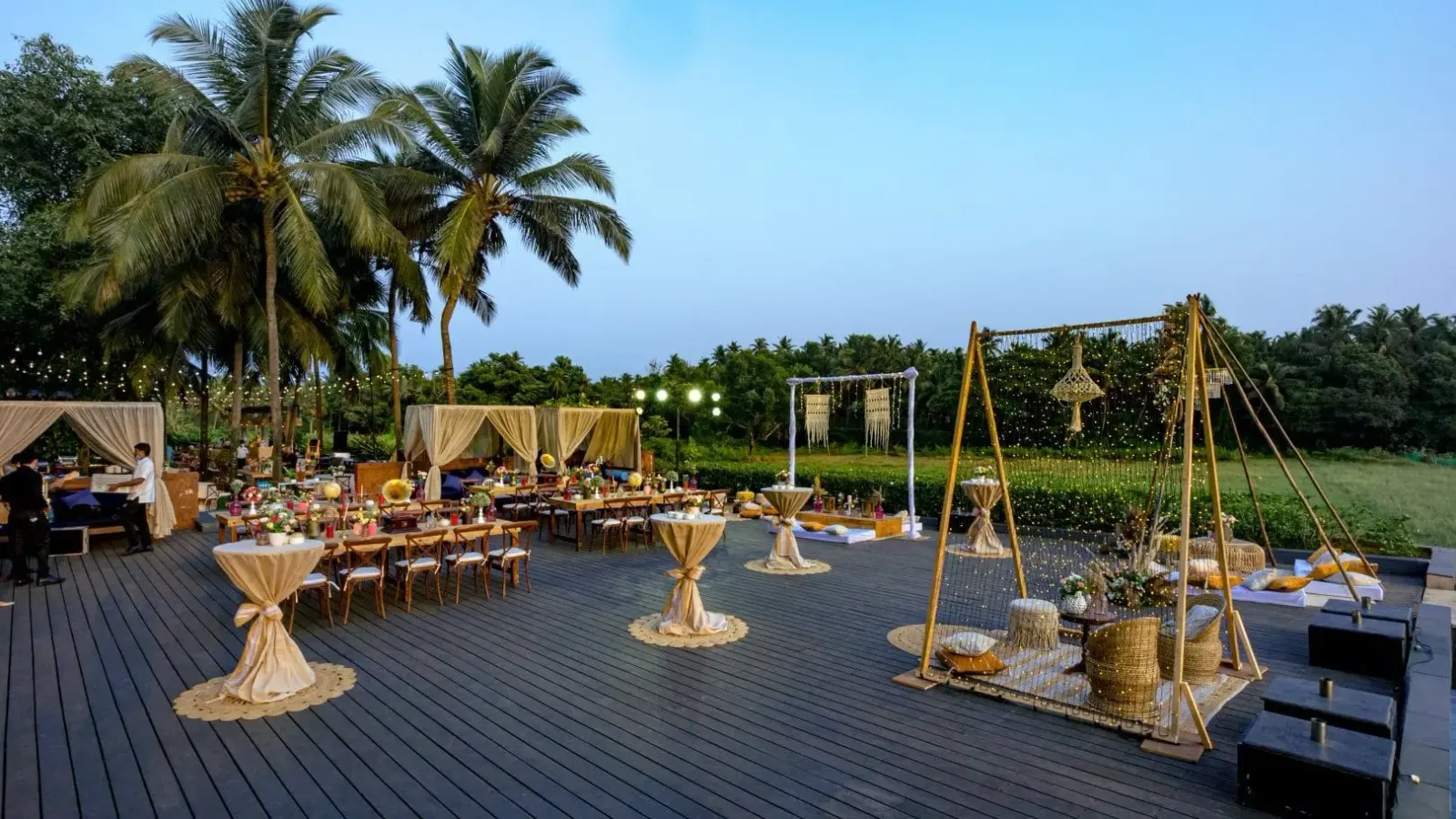
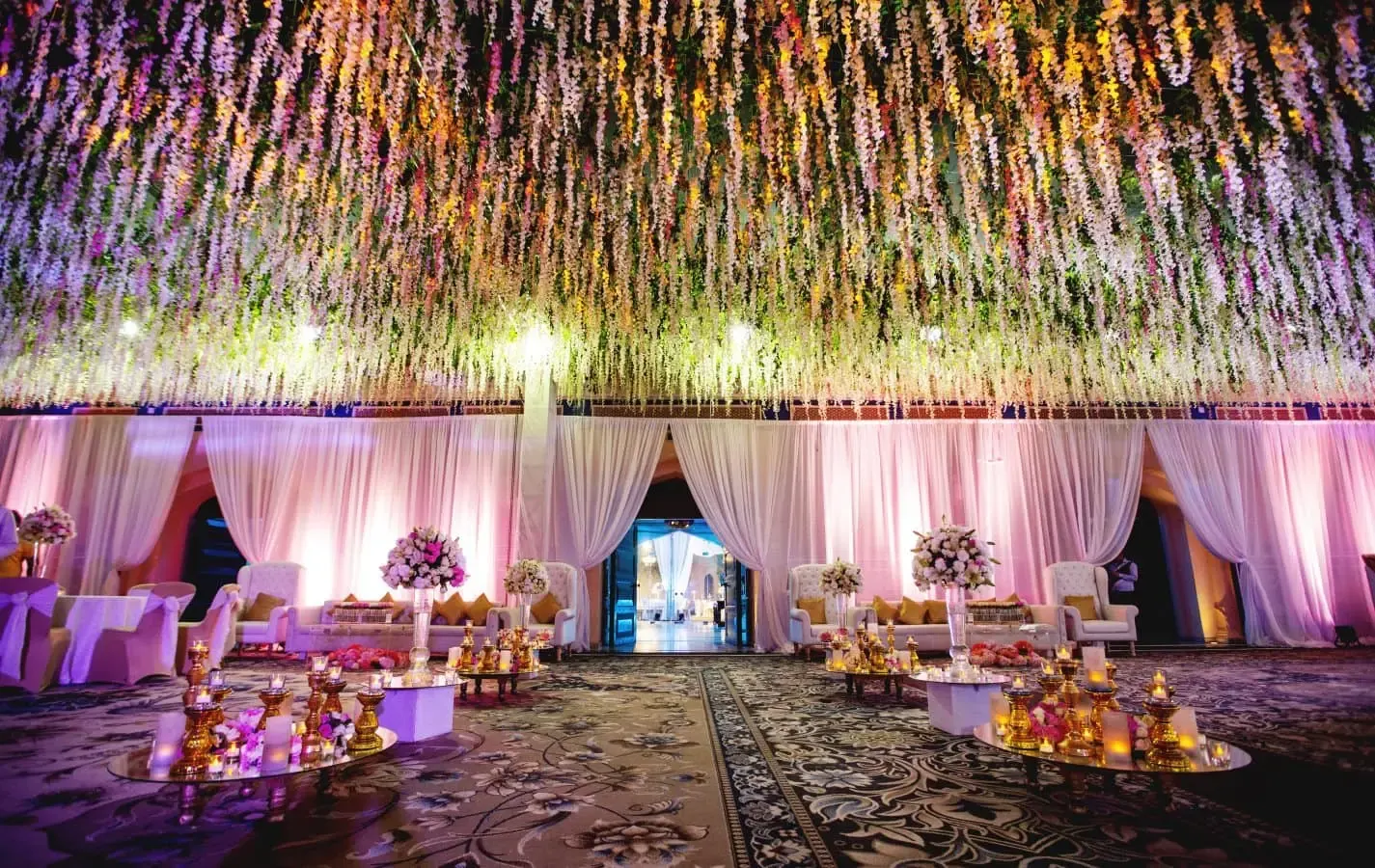
The second is the ballroom-led resort wedding, at almost any scale, where the indoor spaces are the plan rather than the apology. The lawns and beach become bonus moments between spells — a chai break when the sky clears, portraits on wet sand — instead of load-bearing venues.
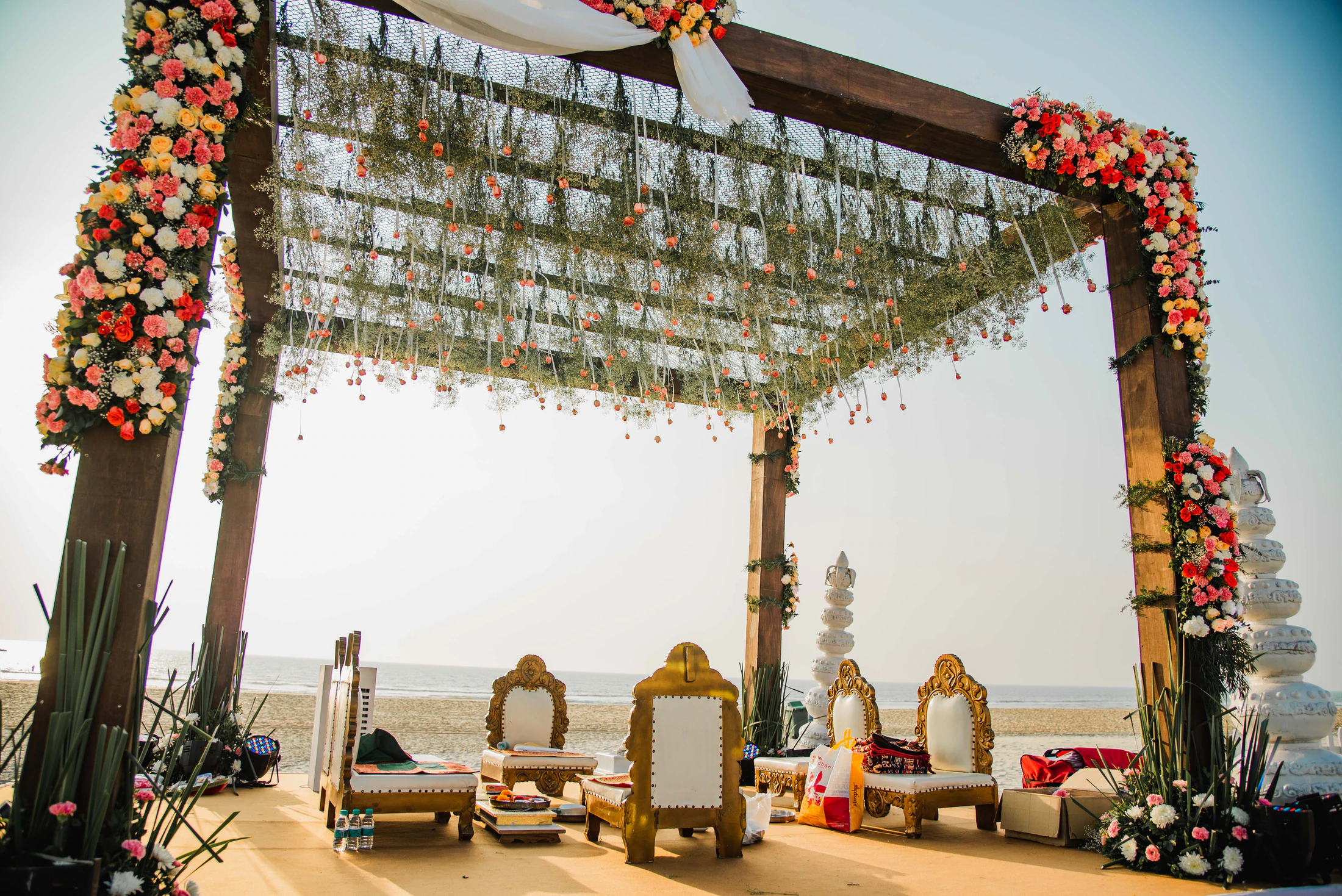
What we advise against, plainly: a full open-air beach or lawn build in July, August or September. We have talked couples out of this brief more than once, and we would rather lose the booking than stage an outdoor function the season will not honour.
A week-by-week read of the season
Early June is the workable opening: the rains are arriving but have not settled into rhythm, and intimate covered ceremonies stand their best chance. This is the window we use for villa weddings of 20 to 30 guests.
From late June through August the season is fully established, and planning is indoor-led without exception. These are the weeks for ballroom weddings designed as ballroom weddings — generous interiors, covered arrival moments, and no outdoor function on the critical path.
September is the long exhale. The spells space out gradually, but gradual is the operative word — a mid-September lawn dinner is still a gamble, while a late-September one backed by a ready ballroom is a reasonable bet. By the final week you are at the doorstep of the shoulder season, and the odds improve markedly.
Why couples choose the monsoon anyway
The case for the monsoon is real, which is why this guide exists. The landscape is at its most striking — rain-washed, deep green, with rivers running full. Nothing in December looks like Goa in August.
Commercially, June to September is the softest season in the Goa calendar, with the lowest venue rates of the year. Weekends that vanish far in advance in peak season remain open much closer to the date, and quieter resorts often mean your wedding is the only one in the house.
There is also the matter of privacy. A monsoon wedding tends to keep guests together under one roof, and the celebrations that result are closer-knit for it.
Choosing a monsoon-proof venue
The non-negotiable: a real indoor answer
The single test that matters: could your main night happen entirely indoors, at your full guest count, without feeling like a compromise? If the answer is no, the venue is not a monsoon venue, whatever the brochure says.
South Goa's resort belt holds several genuine indoor answers. The Lisboa Ballroom at Radisson Blu Cavelossim is a 3,295 sq ft pillarless room with a 21-ft ceiling, steps from the lawns. Holiday Inn Resort Goa at Mobor pairs its sectionable lawns with a pillarless ballroom kept ready as the fallback for every outdoor function.
ITC Grand Goa runs its Salcete Ballroom alongside seaside lawns on an Indo-Portuguese estate, and the Alila Ballroom at Alila Diwa Goa divides into sections to match different function sizes. For very large guest lists, Grand Hyatt Goa holds one of the state's biggest pillarless ballrooms above Bambolim Bay.
South Goa vs North Goa in the rains
The micro-geography matters more than most couples expect. South Goa generally sees drier conditions, calmer seas and a slightly later monsoon onset than the north — one reason the properties above cluster around Cavelossim, Majorda and the southern beaches.
North Goa takes more wind, an earlier onset in the shoulder weeks, and sea conditions that can disrupt anything beach-side. None of this rules the north out; it means the indoor plan carries even more of the weight.
In the heart of the season the distinction narrows — July and August demand indoor-led planning everywhere. The difference matters most at the edges, in early June and late September, where the south buys you a little more usable weather.
Villas vs resorts for intimate monsoon ceremonies
For ceremonies of 20 to 30 guests, villa properties with strong covered structures — deep verandahs, interior courtyards — suit the season better than open resort lawns. The format is honest about the weather from the start.
Resorts win on infrastructure as the guest list grows: ballrooms, in-house power backup, covered service routes and banquet teams accustomed to moving a function indoors. As numbers rise, we plan monsoon weddings at resorts almost without exception.
The contingency plan that actually works
Decision points, not wishful thinking
In our practice, a monsoon contingency is a parallel programme, not a clause in the contract. The indoor layout is designed at the same time as the outdoor one — seating, stage, decor and sound specified for both rooms from day one, so the wet-weather version is a finished design rather than a scramble.
Every outdoor function gets a named decision deadline, agreed in advance with the venue and every vendor. One person — your planner — holds the call, and it is made early enough for the indoor build to complete calmly.
The principle behind the deadline is simple. An indoor function called with grace beats an outdoor one called too late, and guests remember the evening, not the floor plan.
Power, access and sound
Generator backup is standard monsoon practice, specified before the wedding week rather than negotiated during it. The same goes for covered access: how guests move from rooms to function spaces without crossing open ground, which porte-cochère receives arrivals, where the umbrellas wait.
Goa licensing ends amplified outdoor music by 10pm, with celebrations moving indoors after. In the monsoon this rule costs you almost nothing — the party is already in the ballroom, and it carries on.
Design, decor and photography in the rains
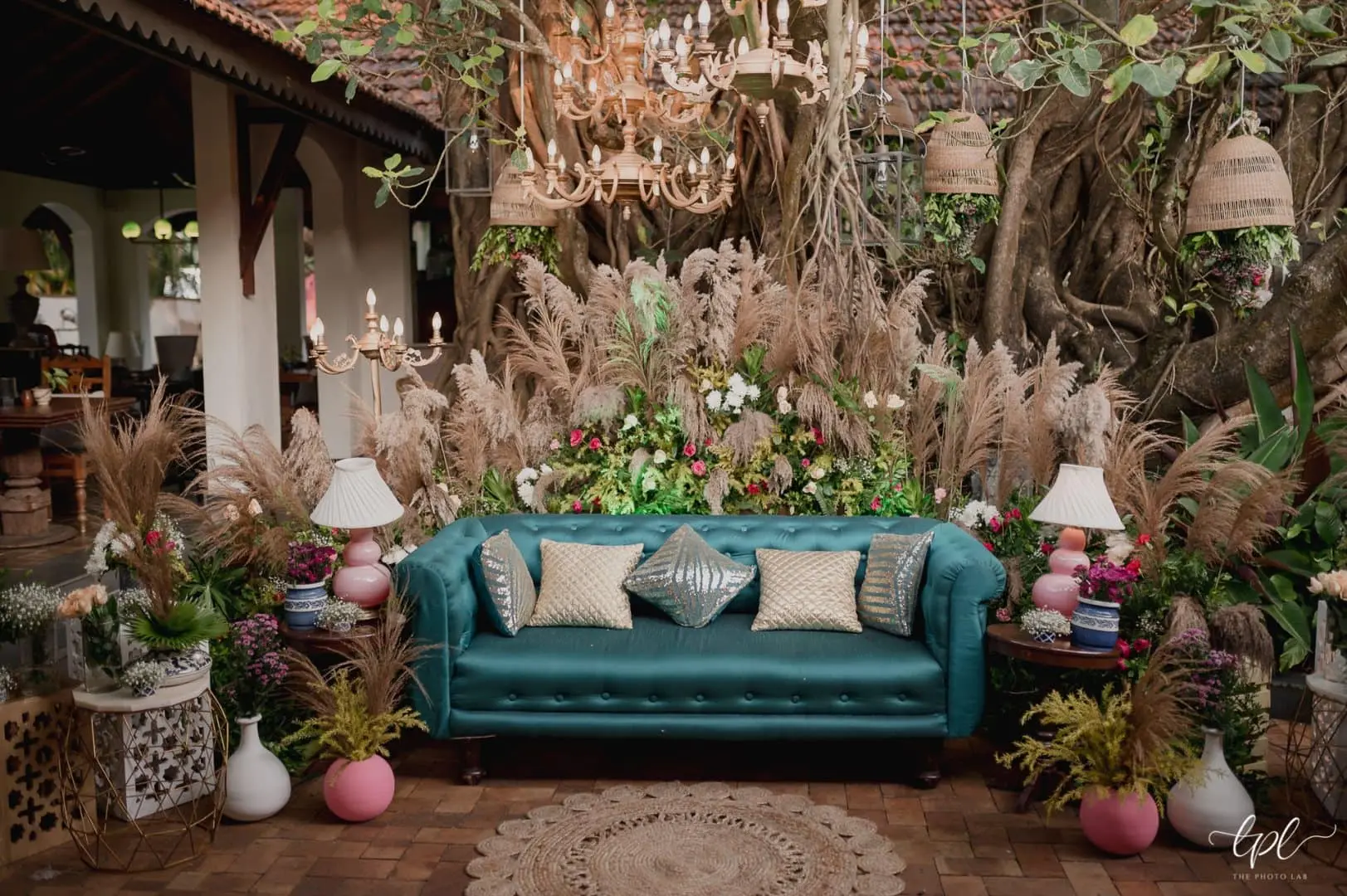
The season redraws the design brief. Fabrics and installations are chosen to tolerate humidity, raised flooring goes onto any outdoor-adjacent surface, and florals lean on humidity-tolerant local blooms rather than delicate imports that fade by the second function.
Build schedules gain buffer days, because load-ins happen between spells. Lighting is designed for overcast skies rather than golden hour — warmer, closer, more candlelit than a peak-season build.
Photographically, the monsoon is a different palette rather than a worse one. Slate skies, wet stone, saturated green and soft, even light flatter couples in ways harsh sun never does. We plan portrait windows flexibly between spells instead of fixed sunset slots.
Guest experience: moving people in the rain
Guest logistics decide whether a monsoon wedding feels adventurous or chaotic. Transfers run with longer buffers, umbrellas travel in every vehicle, and drop-offs happen at covered points — small details, planned once, that remove the season's friction.
Welcome kits acknowledge the weather honestly, and attire guidance — particularly footwear — goes out with the invitations. Between functions, indoor programming keeps the house entertained: long lunches, card tables, spa blocks, chai-and-pakora afternoons while the rain does its work.
Tell guests plainly what the season is and how you have planned for it. Families relax when the information arrives ahead of the weather.
The commercial reality
We keep this guide qualitative on money — our Goa destination wedding cost guide carries the actual ranges, including how season moves them. But the shape of the monsoon conversation is worth knowing before you negotiate.
June to September is when venues have the most room to engage: on dates, on spaces, on terms and structures that are simply not discussed in December. Availability is the second lever — dates that peak season would refuse outright are workable, which suits couples planning on shorter runways.
What does not flex: service standards, the 10pm outdoor sound rule, and the physics of rain. The saving is real, but it is earned through format discipline — the couples who bank it are the ones who designed an indoor-led wedding from the first call.
Planning from abroad: the NRI monsoon question
A large share of our Goa couples plan from outside India, and the monsoon raises the stakes on local eyes. Brochure photography is shot in the dry season; what you need is the wet-season truth of a property — drainage, covered walkways, how function spaces connect when the lawns are out.
In practice we walk venues on video during the season itself, share unedited wet-weather footage, and put the contingency programme in writing before any date is locked. Parents in particular settle on logistics rather than reassurance — a written wet-weather plan answers questions that optimism cannot.
Time zones matter less than season-truth here. A well-run video walkthrough in the rains tells you more than a dry-season site visit ever will.
Planning a monsoon date?
If your wedding falls between June and September — by choice or by family calendar — the difference between a washout and a fine wedding is format discipline and a contingency programme that exists on paper. That is the work we do.
Talk to our planning team about your date, and we will tell you honestly what it can carry.
Related reading:
Questions couples ask next
Not a full open-air one between July and September — the rainfall is too heavy and unpredictable for outdoor functions to be viable. The first two to three weeks of June can work for very intimate covered-format ceremonies at villa properties, and ballroom-led resort weddings can still use the beach for short moments between spells. The honest plan treats indoor spaces as the wedding and the beach as a bonus.
Private planning direction
Turn this guide into venue-fit options.
Share destination, month, guest count and budget range. Elite can help you understand venue fit, guest movement, decor scale, vendor coordination and wedding-week production before you commit.
Useful next pages
Plan Goa wedding