June 12, 2026By Elite Wedding Planning Team
A five-star wedding and a five-crore wedding are not the same thing. We have seen a ₹25 lakh Goa celebration at a boutique resort feel more considered than a ₹3 crore palace buyout that spread itself too thin. The difference is never the budget total — it is where the money lands.
After planning over 220 destination weddings across Goa, Udaipur, Jaipur, Kerala, Thailand, and the UAE, the pattern is clear: couples who treat their budget as an allocation exercise rather than a spending limit consistently produce events that guests describe as effortlessly luxurious.
What Luxury Actually Means at an Indian Destination Wedding
Strip away the marketing. At a destination wedding, luxury comes down to three things your guests will remember six months later:
- They never felt confused. Clear transport, a printed timeline in their room, a point person who answers WhatsApp — this costs almost nothing and does more for perceived luxury than an extra lakh of flowers.
- The food was genuinely good. Not "good for a wedding" — actually good. A well-run live station beats a twelve-item buffet every time, and costs about the same.
- The couple was present. A bride and groom who are not managing vendors, fixing AV issues, or arguing with the banquet manager radiate calm. That calm becomes the atmosphere of the event. The single best budget allocation is a wedding planner who handles operations end-to-end.
Notice that none of these require a palace. A Kerala backwater resort at a third of the cost of a Udaipur heritage hotel can deliver all three — the resort's compact layout actually makes coordination easier, and the natural setting means the décor budget works harder.
The Allocation Principle: 50/30/20 for Destination Weddings
Here is the framework we use with every couple, regardless of whether their budget is ₹20 lakh or ₹2 crore. The percentages shift slightly by destination — Goa's venue costs trend lower than Udaipur's, freeing more for experience — but the structure holds.
50% — Venue, Accommodation, and Food
This is the non-negotiable core. It covers the property buyout or room block, all meals across two to three days, and the ceremony and reception venues. At a Goa beach resort for 150 guests, this typically means three to four properties are in play — the main venue handles the events, two nearby hotels absorb the overflow, and a fourth might host the mehndi. The planner's job is to make this feel like one wedding, not four.
At Udaipur palace venues, the mandatory room block often pushes the accommodation share higher — The Oberoi Udaivilas requires booking all 87 rooms for a buyout, which alone determines a significant share of the total. This is not a hidden cost if you plan for it; it becomes one only if you discover it after signing.
Where to hold the line: Outsource what the in-house team charges a premium for. Bring your own décor team, your own entertainment, and your own photographer — destination venues rarely object if this is negotiated upfront.
30% — Décor, Design, and Atmosphere
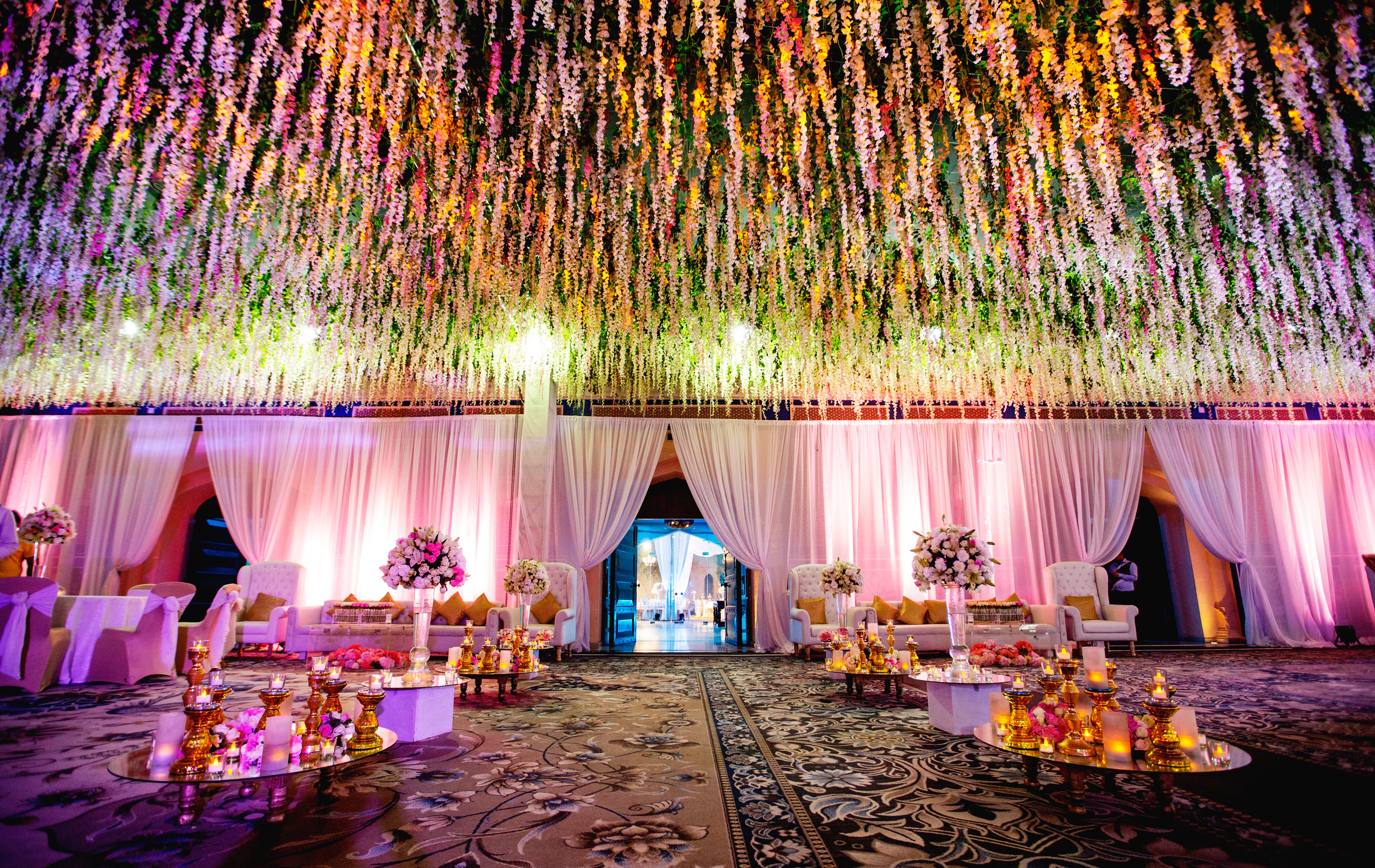
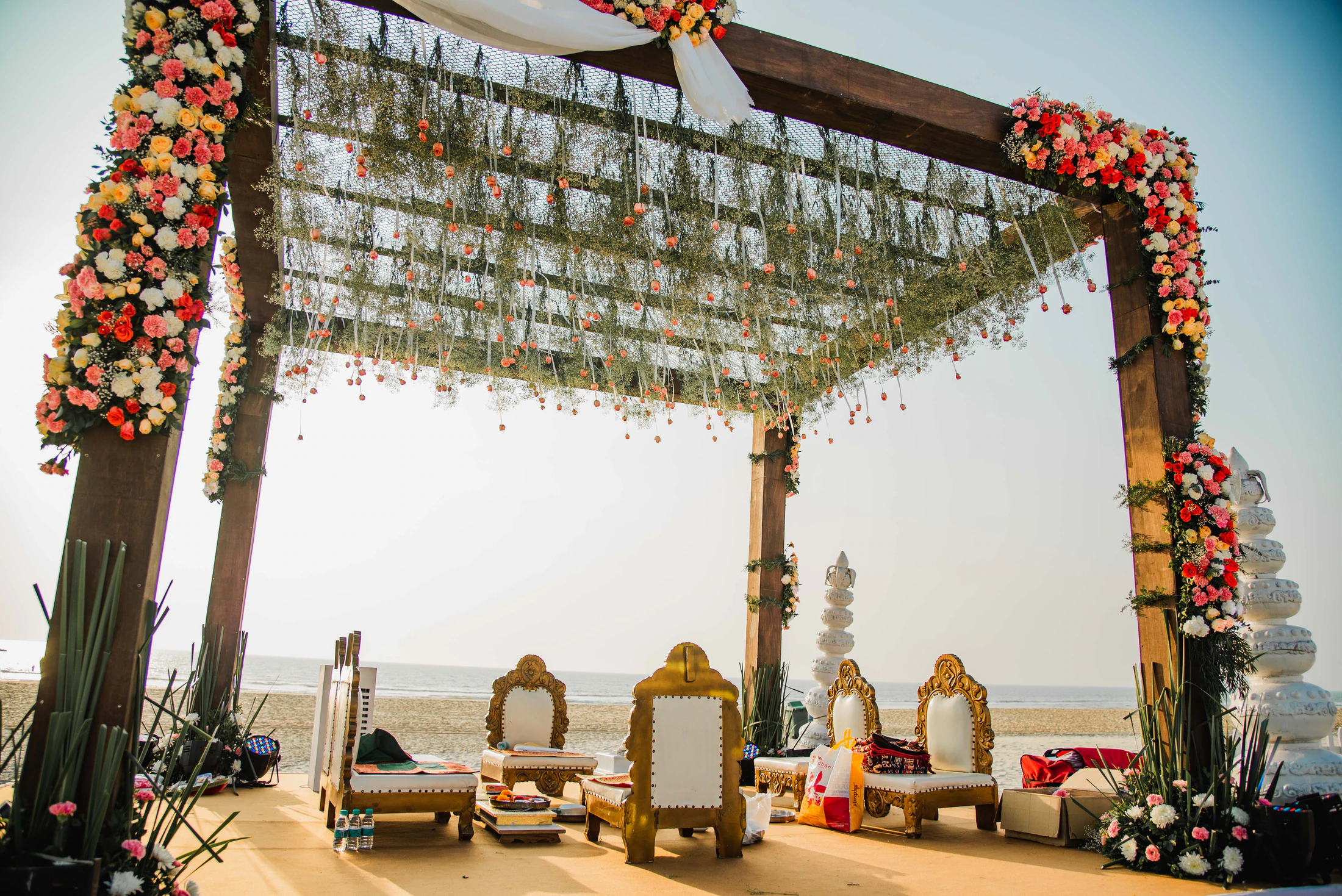
This is where the visible luxury lives. But the rule is: one statement moment, not five average ones. Pick a single visual anchor — the mandap, the reception ceiling treatment, or the sangeet stage — and spend properly there. The rest can be clean, understated, and lit well.
Lighting is the highest-return décor investment. A ₹50,000 uplighting package transforms a bare banquet hall more than ₹3 lakh of additional flowers. Candles — real ones, in large clusters — cost very little and photograph beautifully. At a recent Goa wedding at Taj Exotica, the couple spent seventy per cent of their décor budget on the mandap alone, left the reception clean with just candlelight and greenery runners, and guests still call it the most beautiful wedding they have attended.
Where to save: Chair covers, elaborate centrepieces on every table, flower walls for photo booths. Nobody remembers them.
20% — Photography, Entertainment, and Guest Experience
This is the emotional portion of the budget. Good photography is non-negotiable — it is the only thing you keep. A competent photographer team for two days starts around ₹1.5 lakh in Goa and ₹2.5 lakh in Udaipur; this is not the line item to trim.
Entertainment should match the guest profile, not a Pinterest board. A hundred guests who love to dance need a DJ and a good floor, not a celebrity performer. A smaller gathering of fifty may be better served by a live acoustic duo and curated cocktails.
Guest experience details punch above their weight: welcome bags with practical contents (a laminated weekend schedule, local snacks, a small hangover kit), a WhatsApp group with real-time transport updates, one staff member whose only job is to assist elderly relatives. These cost hundreds, not lakhs, and guests mention them in every speech.
Destination-Specific Allocation Strategies
Goa: Spend on Venue, Save on Décor
The coastline itself is the centrepiece. A beachfront resort like Alila Diwa Goa or ITC Grand Goa gives you the setting for free — palm groves, lawns, sea-facing terraces. Put the budget into F&B and guest comfort. Goa's vendor ecosystem is mature and competitive; décor and entertainment costs here are thirty to forty per cent lower than Udaipur for comparable quality. The trade-off: permits for beach ceremonies and sound curfews (10 PM outdoors) require advance planning. Read the complete Goa destination wedding guide.
Udaipur: Pick One Palace, Do It Properly
An Udaipur wedding is defined by its venue. There is no point choosing a heritage property and then under-spending on the experience within it. The Oberoi Udaivilas, Taj Lake Palace, and The Leela Palace each create a different event shape — the Oberoi for garden ceremonies and lake views, the Taj for the island arrival, the Leela for larger guest counts with garden plus ballroom options. Compare the top Udaipur palace wedding venues before deciding.
Udaipur's mandatory room blocks and 18% GST on venue and catering mean the core fifty per cent must be budgeted accurately. There is no "we will figure it out later" with palace logistics — the boat transfers, generator backups, and royal procession costs are real and predictable. Book the planner before the venue; the planner negotiates terms you will not get on your own.
Jaipur: Best Value in the Palace Category
Jaipur offers palace grandeur at twenty to thirty per cent below equivalent Udaipur venues. Properties like Fairmont Jaipur and Rambagh Palace deliver the Rajasthani heritage experience with more flexible room-block requirements and a competitive vendor market. Jaipur's airport connectivity (direct flights from most Indian metros and several international hubs) also reduces guest travel costs, which couples increasingly factor into their venue choice. Read our Jaipur wedding planning guide.
Kerala: Maximum Atmosphere per Rupee
Kerala's backwaters and coastal resorts offer the strongest value proposition in Indian destination weddings. Compact resorts with natural beauty — coconut groves, waterways, spice gardens — require less structural décor. The state's catering culture is exceptional; local seafood and Kerala's own culinary tradition mean the F&B budget delivers higher quality than comparable spends elsewhere. The main constraints: fewer direct international flights (Kochi and Thiruvananthapuram), and monsoon season (June to August) requires indoor backup planning. See the Kerala destination wedding guide.
Three Real Approaches at Three Budget Levels
The Intimate Goa Wedding: ₹20-25 Lakh for 60-80 Guests
A single venue, two events (sangeet-mehndi combined, then the wedding day), and every rupee on the essentials. Venue plus F&B takes roughly sixty per cent. A good photographer, a DJ, and clean minimal décor with the beach as backdrop account for the rest. No videographer, no drone, no fireworks — and nobody misses them. The result is a relaxed, immersive weekend that feels personal because it is personal. This works exceptionally well at boutique Goan properties where the venue's character carries the aesthetic.
The Statement Udaipur Wedding: ₹70 Lakh-1.2 Cr for 150 Guests
A heritage hotel or smaller palace, three events across three days, one striking décor moment per event. The venue buyout is the single largest line item — book eighteen months ahead and negotiate inclusives (some properties will bundle the sangeet venue and a few rooms if asked at contract stage). A live band for the sangeet, a DJ for the reception, and a string ensemble for the ceremony. Décor is concentrated: a floral mandap that guests photograph, clean centrepieces everywhere else. This is the budget band where a destination wedding planner's fee (typically seven to twelve per cent depending on scope) pays for itself several times over through vendor negotiations alone.
The Full Heritage Experience: ₹2 Cr+ for 200+ Guests
At this level, you are buying an uncompromised version of the destination. A full palace buyout at Umaid Bhawan Palace, Jodhpur or Suryagarh, Jaisalmer, four to five events, a celebrity performer if the guest profile demands it, and a design team that treats each event as a distinct production. The allocation principle still applies — the difference is that each bucket is larger, so the single statement moment per event becomes more ambitious. What does not change: the need for an experienced planner. At this scale, the logistics of managing 200 guests across a heritage property (many of which were not built as hotels) are exponentially more complex, not less.
Five Common Allocation Mistakes
1. Booking the Venue Before the Budget
You fall in love with a venue, sign the contract, then build the rest of the wedding around what is left. This is the single most common error and the hardest to fix. The venue should be the last decision in the planning phase, not the first. Know your total number, allocate the three buckets, then see which venues fit.
2. Spreading the Décor Budget Too Thin
Five spaces with ₹1 lakh each of flowers look like five spaces with ₹1 lakh of flowers. One space with ₹5 lakh of thoughtful design looks like a wedding someone invested in. This is the hardest lesson for couples to internalise because it feels counterintuitive — surely every space should look nice? It should look clean and intentional. Only one needs to look spectacular.
3. Underestimating GST and Mandatory Charges
At palace venues, 18% GST applies to the entire venue and catering bill — not an afterthought, but a substantial add-on. Mandatory room blocks, boat transfer fees, generator charges, and service charges compound. Build a fifteen per cent contingency above your planned budget, not five.
4. Trimming the Planner Line Item
A full-service planner at a destination wedding is not a luxury add-on — it is the operational backbone. When you trim the planner budget, you become the planner, and you cannot be both the host and the operations manager. The couples who tell us their wedding felt calm and unhurried all had one thing in common: a planner handling every behind-the-scenes crisis they never learned about.
5. Chasing Trends Instead of Atmosphere
A 2026 trend that reaches you via Instagram has already been done at thirty other weddings this season. Your guests will not remember whether you had the latest ceiling installation. They will remember whether the food was served hot, the music was right for the room, and you looked happy. Spend on what creates feeling, not on what photographs for a Reel.
Frequently Asked Questions
Our comprehensive destination wedding cost guide covers specific price ranges; the FAQs below focus on allocation strategy — the decisions that determine whether your budget feels like luxury or just feels spent.
Questions couples ask next
Yes — when the budget is allocated to the right three things. At this level, choose a naturally beautiful venue that requires minimal structural décor (a Goan beach resort or a Kerala backwater property), invest in genuinely good food rather than a large spread, and hire a skilled photographer. A single, well-designed mandap on a lawn with candlelight costs far less than décor spread across multiple spaces and looks more considered. We have executed several Goa weddings in this band where guests described the experience as intimate luxury, not budget-conscious.
Private planning direction
Turn this guide into venue-fit options.
Share destination, month, guest count and budget range. Elite can help you understand venue fit, guest movement, decor scale, vendor coordination and wedding-week production before you commit.
Useful next pages
Plan Goa wedding
From reading to a real wedding plan.
Continue planning